Back to Timeline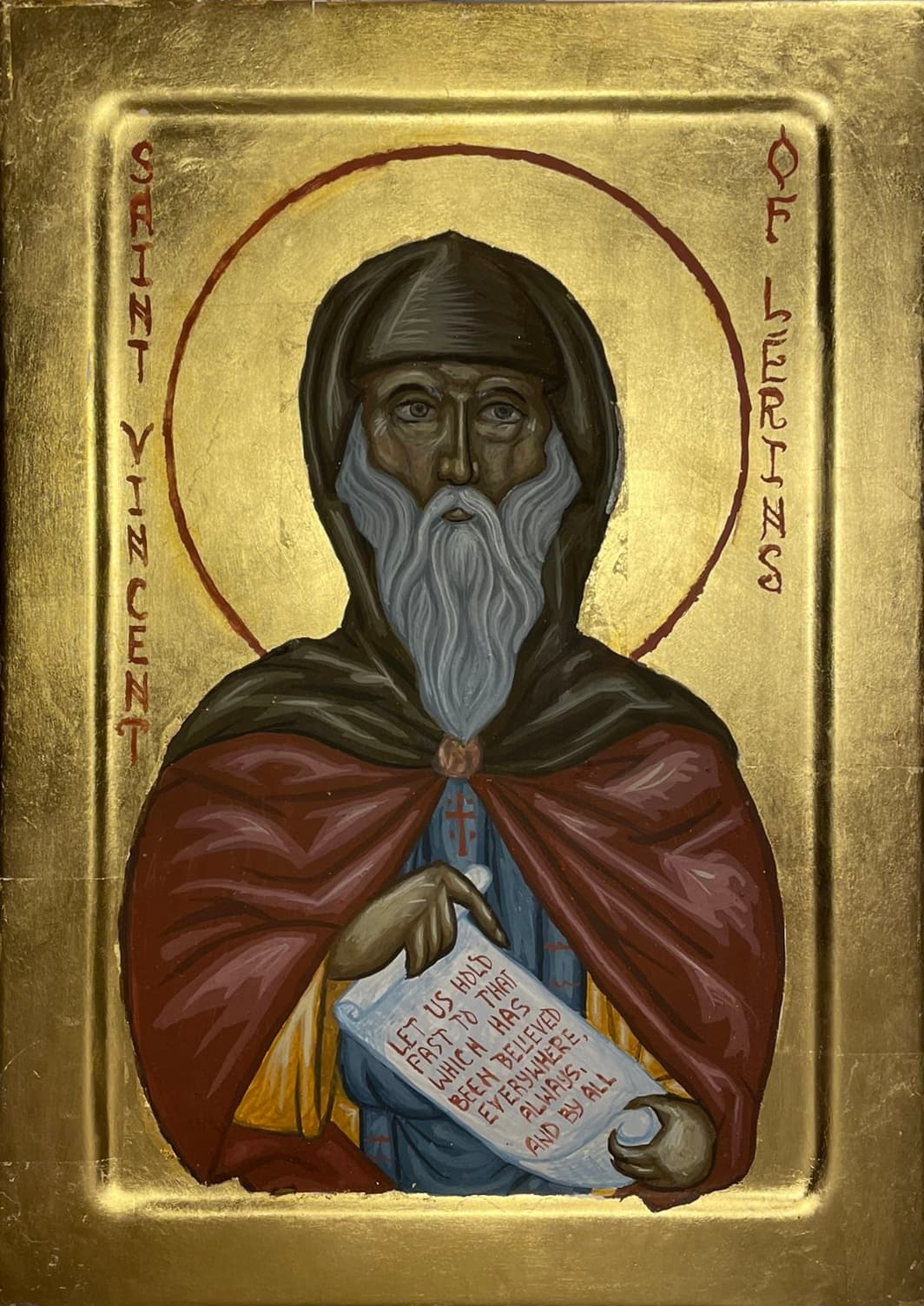
c. 325 – 636 AD
Vincent of Lérins
died c. 445 AD
Lérins Abbey (Island off the French Riviera)
Overview
A monk who sought a scientific method to distinguish truth from heresy. He famously defined Orthodoxy as "that which has been believed everywhere, always, and by all."
Did You Know?
His writings were partly a reaction against St. Augustine, whom he feared had gone too far with his harsh views on predestination.
Major Writings
The Commonitory (Commonitorium)
His primary surviving work. It is a guide for the perplexed believer on how to distinguish truth from new heresies. This is the source of the "Vincentian Canon"—the rule that true doctrine is that which has been believed "everywhere, always, and by all."
Read OnlineHistorical Context
The Golden Age: Latin (Western) Fathers
The shapers of Western Catholicism and Protestantism.
11 Church Fathers in this era
View All Fathers
Part of The Golden Age: Latin (Western) Fathers